October 2026 · 5 min read
15,000 calls: what one season at a 156-year-old restaurant taught us about AI
We built an AI phone agent and the dashboard behind it for our own 156-year-old restaurant before selling it to anyone. Here is what one full season produced: about 15,000 answered calls, 12,000 covers from texted booking links, and the first honest picture of demand we have ever had, including the parts we are still fixing.
On the busiest nights this season, six people called Claudio's Waterfront at the same moment. Not six calls in an hour. Six at once.
No host answers six phones. A host answers one, puts two on hold, and loses three. At Saylor Beach House, our other Greenport location, the peak was five.
That is the number that explains why we built what we built. Everything else in this post follows from it.
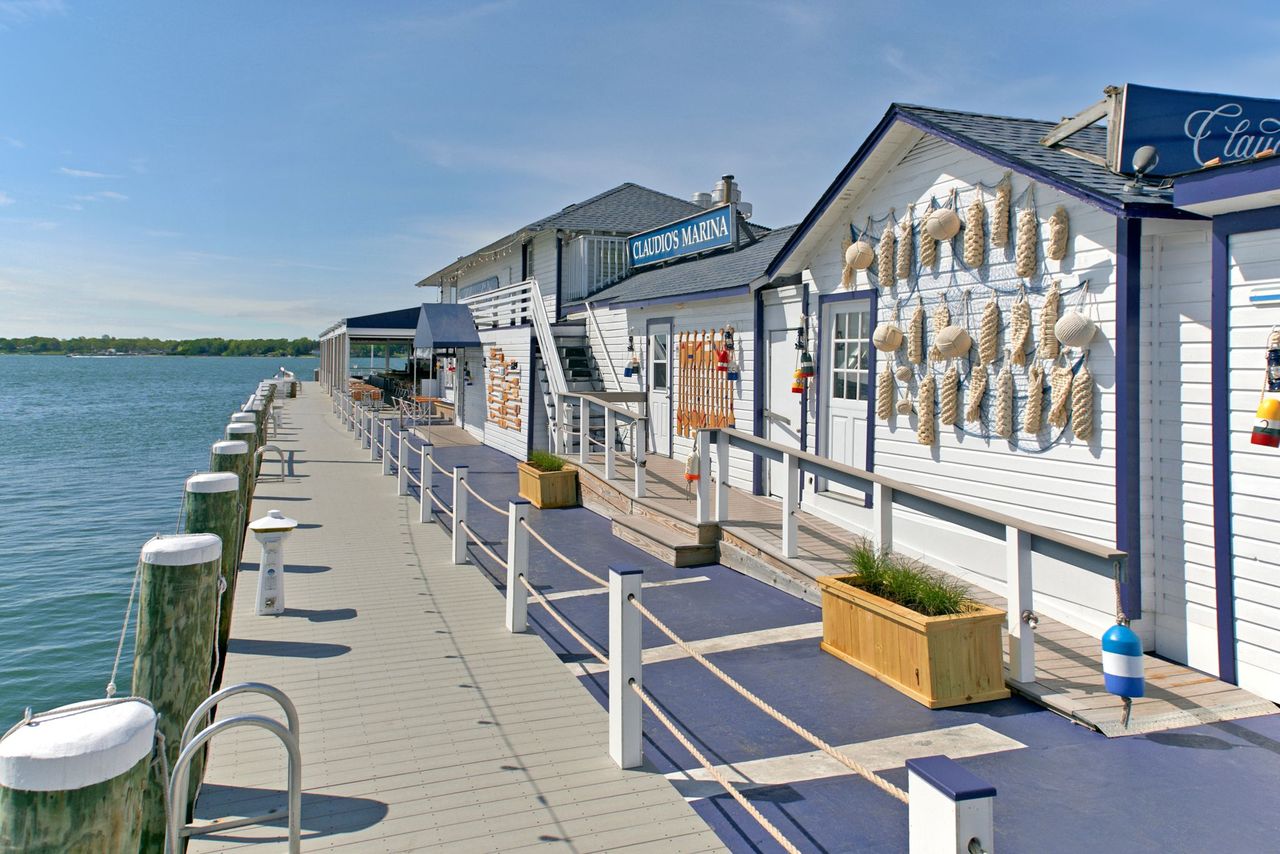
A 156-year-old restaurant on the North Fork
Claudio's has been serving Greenport since 1870. It is not a startup. It is not a chain. It is a waterfront institution where people have been getting engaged, burying parents, and bringing their kids for generations.
It is also a business I own.
That matters for a specific reason. When we built Calibrate's phone agent and the dashboard behind it, we did not build it for a hypothetical client. We built it because our own hosts were drowning on Saturday nights in July, and because we were losing catering inquiries we never knew we had. Every decision in the product got made by someone who had to live with it on Monday.
Most AI companies selling to restaurants have never run one. We run two, in a market with a short season and no margin for a bad August.

What we built
Three things, in this order.
A phone agent that answers every call. Hours, location, parking, dock slips, private events, dietary questions, whether we are open in a nor'easter. It answers immediately, in full sentences, at two in the afternoon and eleven at night. When it cannot resolve something, it takes the details and routes it.
A dashboard behind the agent. This is the part that matters, and the part nobody else does. Every call is transcribed, categorized, and tracked. A catering inquiry does not evaporate into a host's memory. It becomes a record with a status, and somebody owns it.
A rebuilt website. We moved off the old platform and onto something we control: real-time updates, no third-party change fees, and a menu we can fix at nine in the morning instead of emailing a vendor and waiting two days. We also added a chat agent that handles the questions people would rather type than ask.
None of it replaced a single person. It gave the people we have a chance to do their actual jobs during a dinner rush.
One season, by the numbers
| What | Result |
|---|---|
| Calls answered by the agent | ~15,000 |
| Real conversations handled | 12,000+ |
| Covers from texted booking links | 12,000+ |
| Same-day bookings | 1,660 |
| Booking links texted | 2,700 |
| Large-party inquiries captured (10+) | 136 |
| Staff hours saved on the phone | ~300 |
| Peak simultaneous calls (Claudio's / Saylor) | 6 / 5 |
| Chat conversations on the site | ~350 |
The line to sit with is the third one. Twelve thousand covers came from a text message the agent sent after a phone call, including 1,660 people who booked the same day they called. These are not reservations we would have taken anyway. They are reservations that used to depend on whether somebody got to the phone.
Underneath that, 136 large-party inquiries: rehearsal dinners, milestone birthdays, corporate nights. One of them is a 120-person private event. Some are for 2027. Before this season, those arrived on a busy phone, went onto a pad, and some were never seen again.
And roughly 300 hours of staff time came back, time that used to be spent saying the hours out loud.
What 15,000 calls tell you that nothing else can
Here is the part we did not expect.
A restaurant knows exactly what it sold. The POS tells you that every night. What no restaurant has ever known is what people asked for and did not get: the party of twelve that called and was never called back, the question about gluten-free that came up forty times in July, the hour on Tuesday when the phone rang and nobody picked up.
When every call is transcribed and categorized, that becomes data. Demand that never converted, written down.
That changes real decisions. Staffing a shift you did not know was busy. Adding a menu item people keep asking for. Noticing that a whole category of inquiry is arriving at a time when nobody is there to take it.
We went looking for a way to answer the phone. We ended up with the first honest picture of demand we have ever had.
What we are still fixing
Two things, and we would rather say them than have you find them.
Capturing a lead is not the same as closing one. Our season review turned up something uncomfortable: the dashboard was full of leads, and the team was not logging in every day to work them. That is not a staff problem. It is a product problem. If the people who most want the revenue are not opening the tool, the tool is asking too much. Leads should push to the person who owns them, age visibly, and escalate on their own. We are building that now, here, before it ships anywhere else.
Our reservation platform has no API. So the agent sends a booking link rather than booking the table outright. That handoff still worked (2,700 links produced more than 12,000 covers), but it is a step that should not exist, and a guest who does not tap the link is a guest we lost. We are not going to pretend otherwise.
We publish these because the alternative is a case study that reads like an ad. Anyone who has run a restaurant knows there is always a second list.
Operators helping operators
Calibrate did not start as a product company. It started because I own restaurants and a few other businesses, and the phone was a problem I could not hire my way out of.
We built the thing, ran it through a full season on our own books, and only then started selling it. That order matters. It means when a restaurant owner tells us the hostess stand is chaos at 7pm on a Saturday, we are not nodding politely.
If you run a place where the phone rings more than you can answer, a free AI Calibration Call is where we start: we look at your real numbers and come back, in just days, with what your missed calls and captured demand are actually worth, in writing, no commitment.
Want the numbers for your business?
The free AI Calibration Call comes back with a written recommendation — your own numbers attached — in just days.
Book your AI Calibration CallMore reading: all insights.